Short answer
Which network should you specify for a Binance withdrawal?
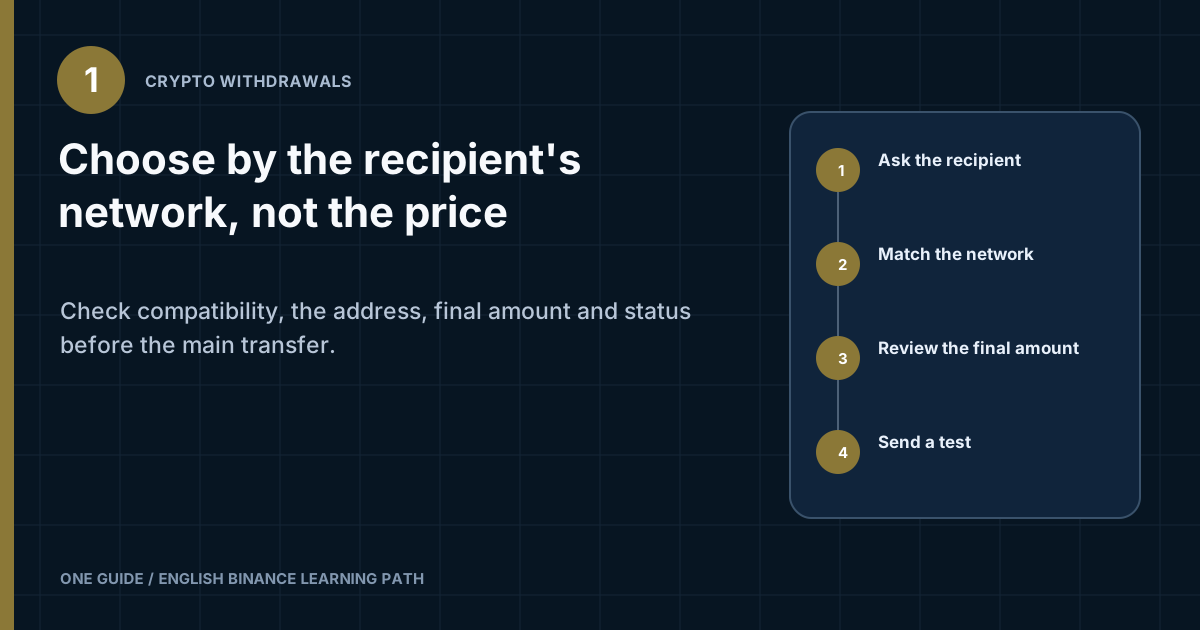
Open the recipient's deposit page, select the same asset, and record the supported network, address, and MEMO or Tag if shown. On Binance, choose only an exact network match. Then check the final amount after the fee, the minimum withdrawal, and the recipient's minimum credit. For a new address or network, first send a small amount that remains above the minimum after deductions. [1] [2]
Compare fees only among networks supported by both sides. If the recipient does not accept the selected blockchain, the low cost does not offset the risk of losing funds.
Why does network selection begin with the recipient?
The recipient knows which blockchains it can use to accept the specific asset and which details are needed for crediting. As the sender, Binance may offer several networks, but an option's presence in this list means only that the asset can be withdrawn over it. It does not confirm compatibility with an external wallet or another exchange. [1]
If you are sending to a centralized platform, open its deposit section. If you are sending to a personal wallet, make sure the app supports the required network and shows the asset on that exact network. A message from someone in a messenger can prompt you to open the details, but it is not sufficient proof by itself.
| Recipient | Reliable source of details | What else to check |
|---|---|---|
| Another exchange | Current deposit form for the required asset | Network, minimum, MEMO/Tag, deposit status |
| Personal wallet | Receive screen and official wallet documentation | The asset is added on the selected network, and the recipient controls the keys |
| Another person | A new address from an agreed secure channel | The recipient confirms the asset, network, and access to the address |
| Your second account | Deposit form for this exact account | Profiles, subaccounts, and old templates have not been confused |
Why is the question 'which network does USDT use' framed incorrectly?
A token ticker does not determine a single blockchain. One asset can circulate on several networks. The right question is: 'which network does this recipient support for this asset right now?' The answer may change because of maintenance, regional conditions, and platform policy.
How does withdrawing to an exchange differ from withdrawing to a personal wallet?
When withdrawing to an exchange, you depend on its crediting rules; in a personal self-custody wallet, you control the keys but bear responsibility for the network and gas yourself. In both cases the address must be current, but the recovery plan after an error differs fundamentally.
| Scenario | Who controls the key | What is critical after sending |
|---|---|---|
| Another centralized exchange | Platform operator | Supported network, MEMO, minimum, and internal crediting |
| Your software wallet | You, through a seed phrase or private key | Selected network, token display, and native asset for gas |
| Hardware wallet | You, through the device and recovery phrase | App support for the network and verification of the address on the device screen |
| Another person's wallet | Recipient | Independent confirmation of the address and receipt |
A custodial recipient may technically control the address but not support the selected network for automatic crediting. In that case, the presence of tokens on the blockchain does not mean the user will receive them in the balance. Only the recipient's support team can assess the possibility of manual recovery.
Are an internal transfer and a blockchain withdrawal the same thing?
No. An internal movement between accounts on the platform may not create a public TXID, while a blockchain withdrawal sends an asset to an external address over the selected network. The interface may offer different methods for one recipient. Before confirming, check whether a network address, withdrawal fee, and expected TXID will appear.
Do not try to turn an external address into an internal transfer just to save the fee. The method must match the recipient. If someone provides a UID or email address, confirm the platform's official mechanism. If they provide a blockchain address, use only a supported network and a regular withdrawal.
How do you find a compatible network if Binance shows several options?
Build the intersection of two lists: Binance's available withdrawal networks and the recipient's available deposit networks. Only an option common to both is permitted. The names must denote one blockchain and one standard, not merely look similar.
- At the recipient, select the asset and view the list of deposit networks.
- On Binance, open withdrawal for the same asset and paste the address only after you know the network.
- Match the full name, network ticker, and standard guidance.
- If you find several matches, compare fees, minimums, speed, and network status.
- If there is no exact match, do not withdraw directly. Do not choose the closest name.
Addresses on some EVM-compatible networks look identical. This technical similarity creates a false sense of safety. The Binance form may accept the string, but the blockchain is still selected in a separate field. An error sends tokens to another network, where the recipient may not see or support them.
Can you rely on the automatically detected network?
Autofill is a useful hint but does not remove final responsibility. One address format sometimes corresponds to several networks. Compare the selected option with the recipient's screen and check it again before confirming.
How do you withdraw from Binance in a safe sequence?
First record the expected transfer parameters, then complete the form, and assess the final outcome only at the end. This sequence reduces the chance that a low fee or familiar address will distract from the key check.
- Open the recipient's detailsChoose the required asset and network. Do not use an address from transaction history or an old message without checking it again.
- Open withdrawal on BinanceChoose the same cryptocurrency. Check that you are withdrawing a Spot asset rather than trying to move a position or another product.
- Paste the addressCompare the string after pasting. If the characters changed, stop and check the device.
- Choose the exact networkIt must match the network of the recipient's deposit address.
- Copy the MEMO/TagIf the recipient shows a separate identifier, paste it into a separate field without spaces or a label.
- Enter the amountAccount for the minimum withdrawal, Binance fee, and recipient's minimum deposit.
- Check the confirmation screenCheck the asset, network, full address, MEMO, fee, and amount to be received.
- Complete the security checksConfirm the transaction only in the official interface and do not give codes to third parties.
After changing the asset, network, or address, reread the final values. The interface may recalculate the fee, minimum, and amount to be received. A screenshot from an old guide does not take priority over the account's current form.
The recipient is another exchange or service. Take the address, network, and MEMO from the recipient's current deposit page after selecting the asset. Do not use a general address from the profile or details from an old transaction. Also read the minimum credit amount: after the Binance fee, the test must arrive above this threshold.
The recipient is your personal wallet. First open the required blockchain and make sure the wallet can display and later send the selected asset. The same address string on several EVM networks does not permit an arbitrary choice. A future transfer may require the network's native coin for gas.
Another person sent the address. Confirm it through an independent channel, especially if the amount is significant or the message came after a long gap. A compromised messenger can replace details in a familiar conversation. Do not ask the recipient to send a password, seed phrase, or screenshot of the entire wallet; the address, network, and required identifier are enough for comparison. A QR code is used. After scanning, compare the resulting string with the text address and check the network separately. The code simplifies character transfer but may contain an attacker's address or parameters for another network. Never scan a code from an advertisement, comment, or remote-support window.
The address is already saved. The address-book label should identify the owner, asset, and network, but it does not prove that the recipient still accepts deposits. Before withdrawing, reopen the receiving page and compare the details. If the service has stopped supporting the network, an old whitelisted address does not become safe.
Before final confirmation, state in your own words who owns the address, which network will receive the broadcast, whether a MEMO is needed, how much will arrive after the fee, and where the status will appear. If any question lacks an answer, do not enter the 2FA code. A pause before sending is reversible; a broadcast transaction usually is not.
Do not replace address verification with sending the full amount and hoping support can help. The recipient platform may not control the keys on another network, and Binance cannot cancel a broadcast transaction. A test limits the size of a possible error, but it works only when you verify that it was actually credited before the next withdrawal.
If the final screen automatically changed the network after you pasted the address, return to the recipient and compare the name. Do not confirm solely because the interface accepted the string. For compatible address formats, syntax validation may pass on several blockchains even though the recipient expects the asset on only one.
How does a withdrawal fee differ from a network fee and trading fee?
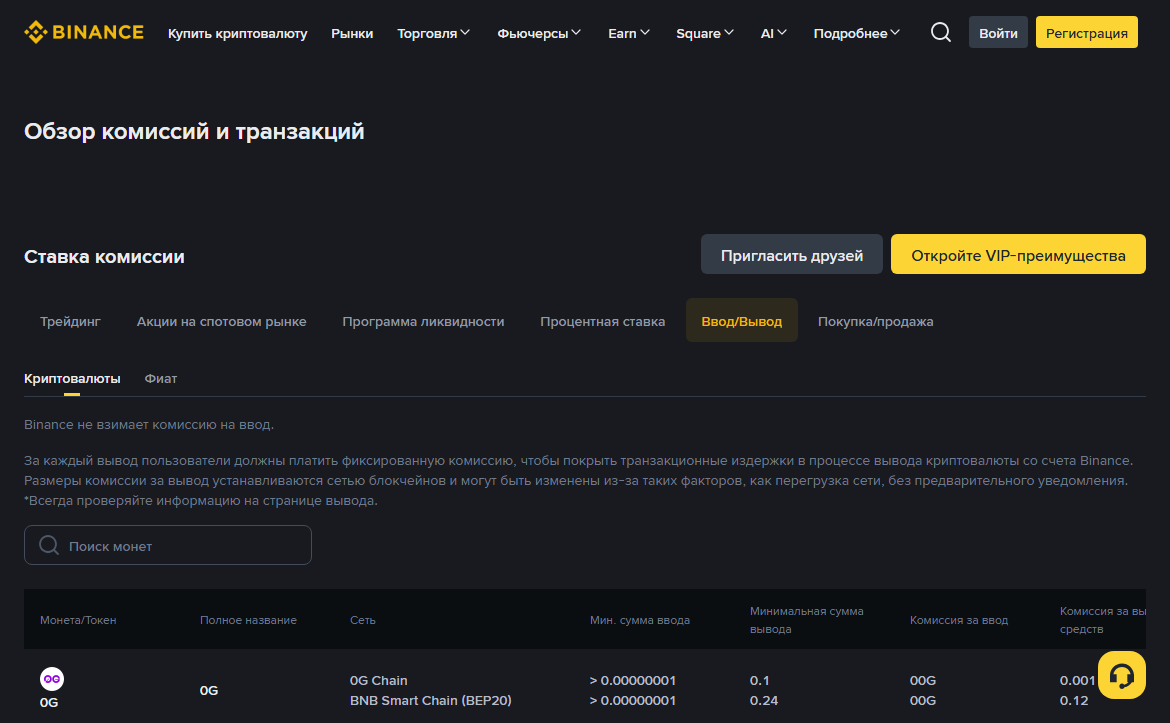
A withdrawal fee relates to moving an asset outside the platform, a trading fee relates to executing a trade, and network gas pays for blockchain operation. The Binance withdrawal interface shows the deduction and expected amount at the recipient. These values may depend on the asset and network. [3]
| Indicator | What it affects | Where to check |
|---|---|---|
| Minimum withdrawal | Whether the entered amount can be sent | In the Binance withdrawal form |
| Withdrawal fee | How much is deducted on sending | On the current final screen and fee page |
| Amount to be received | How much should arrive before any internal processing by the recipient | In the form's final calculation |
| Minimum deposit | Whether the recipient will credit a small amount | On the recipient's deposit page |
Do not copy percentages or fixed values from someone else's example. For a preliminary calculation, you can use post-withdrawal amount calculator, but the actual fee from the screen must be entered manually. The tool sends nothing and does not retrieve Binance rates in real time.
First find the exact asset, then expand or review the network rows. The same ticker does not mean one fee: the minimum amount and deduction may differ for every supported network. Do not carry a value from the first visible row into another option even if the addresses look identical. The public schedule is useful for preliminary comparison but does not confirm withdrawal availability in your account. A network may be temporarily suspended, the product may differ by region, and the final form accounts for the selected address and available balance. If the table and form disagree, stop and determine why; do not adjust the amount to fit an old screenshot.
Keep the 'minimum withdrawal amount' separate from the 'recipient's minimum deposit amount.' The first limits creation of the Binance request; the second affects crediting by another platform. A safe test amount must clear both thresholds after the fee is deducted. Checking only one minimum leaves a risk that the test will not be credited.
Record the figures together with the network name and viewing time, then check them again on the final screen. If the fee changes after pasting the address or switching networks, recalculate the amount to be received. Do not confirm from memory or use a 2FA code while the total differs from the recorded plan.
When withdrawing to a personal wallet, think about the next action as well. The received token may require the same network's native asset for a future transfer. This is not the Binance fee for the current withdrawal, but it is a real operational constraint. Do not choose a network solely because of a low deduction if you do not understand how you will then manage the asset.
How do you compare two compatible networks?
Compare the full cost and operational constraints, not only one fee figure. Account for the minimum, expected time, deposit availability at the recipient, and the presence of a native asset for the next transaction in a personal wallet. A cheap token withdrawal may be inconvenient if gas later requires a separate network coin.
How do you choose a test amount?
The test must be small enough to limit harm but large enough to clear both minimums after the fee. There is no universal amount. It is determined by current values in the Binance form and at the recipient.
- Take the minimum withdrawal from the Binance form.
- Take the minimum deposit from the recipient's page.
- Add the withdrawal fee to the amount that must actually arrive.
- Leave room for rounding and precision constraints.
- After crediting, check that the asset appeared on the intended network and can be used.
A 'confirmed' status in an explorer does not replace checking the internal balance. Repeat the comparison for the main amount. Do not copy an address from your own withdrawal history because the history may contain a similar fraudulent address.
Do you need an address book and withdrawal whitelist?
For regular recipients, these features reduce the risk of a typo and make an unauthorized withdrawal to a new address more difficult. Save the entry with a clear label stating the owner, asset, and network. Before saving it for the first time, independently verify the communication channel.
A whitelist does not make a stale address current. The recipient may have stopped supporting the network or changed the rules. A waiting period after adding a new address is a security measure. Do not try to bypass it through a third-party service or by handing over the account.
The saved string belongs to a specific route. Still check the selected network and additional identifier before withdrawing.
How do you read a withdrawal status and TXID?
Binance history shows the withdrawal's internal stage, while the TXID lets you check a transaction already broadcast to the blockchain. If there is no TXID, the transaction may not yet have left the platform. If a TXID exists, open it through the official link in the history or paste it into an explorer for the correct network.
- ProcessingThe platform is performing an internal check or preparation. Do not create a duplicate.
- A TXID appearedThe transaction can be tracked in an explorer for the selected network.
- Pending on the networkThe transaction was broadcast but is still waiting for inclusion or confirmations.
- Success on the networkThe blockchain processed the transaction, but the recipient may still be performing internal crediting.
- The balance did not changeCheck the network, address, MEMO, minimum, and deposit history at the recipient.
Do not promise a time in minutes without data for the specific transaction. It is affected by internal processing, network load, and the recipient's confirmation count. Save the TXID, but do not publish it together with personal data unless necessary.
If the request cannot be created, receives Failed status, the withdrawal is suspended, or the record remains without a TXID for a long time, use the separate guide to diagnosing a withdrawal that is not working. This page covers network selection and checking a route that has already been sent.
What should you do after a withdrawal over the wrong network?
Do not repeat the transaction; first determine who controls the private key for the destination address. If this is your self-custody wallet and it supports both networks, the asset can sometimes be seen after switching networks and adding the token. If the address belongs to another exchange, the solution depends entirely on its support. [2]
Do not import a seed phrase into an unknown app for 'recovery.' Doing so can expose every asset in the wallet. Use the wallet's official documentation, verify the token contract through a trusted explorer, and remember that a native network asset will be needed to send it back.
Binance cannot cancel a transaction after the blockchain confirms it and does not control the external address. Save the TXID, network, asset, amount, address, time, and form messages. Contact the party that controls the destination address. Recovery is not guaranteed and is sometimes technically impossible.
Which signs require an immediate stop?
Stop at any mismatch in the details, unexpected address change, or request to share access secrets. An error is easier to prevent before entering a 2FA code than to investigate after confirmation.
- The pasted address differs from the source.
- The recipient sent a new address without confirming it through the previous channel.
- Binance detected a network automatically, but it does not match the recipient's screen.
- An unknown person asks you to send a test to their address.
- 'Support' demands a password, seed phrase, private key, or 2FA code.
- A website promises to cancel an already confirmed transaction for an advance payment.
For significant amounts, it is useful to split the check: one person prepares the details and another independently checks the recipient, network, and amount. For personal use, a second trusted device or a paper record made from the current screen can serve this role.
Frequently asked questions
Can one coin be withdrawn over any network in Binance's list?
No. The list shows Binance's options, not the recipient's capabilities. You need a network available on both sides for the same asset.
If the form accepts the address, is the network definitely correct?
No. Several networks use similar address formats. Compatibility is confirmed only by an explicit network match at the recipient and sender.
Why is the amount received lower than the amount entered?
The form may deduct a withdrawal fee. Review the calculation before confirming. A trading fee and withdrawal fee are different costs.
Do you need to make a test every time?
It is especially useful for a new address, new network, and large amount. The risk is lower for a repeated route, but the details and network status must still be checked again.
Who helps with an incorrect MEMO at an external exchange?
The receiving platform, because it controls the address and internal crediting. Give it the TXID and other public details through the official channel without disclosing access secrets.
Official sources to check
Sources checked on August 8, 2026. Fees, minimums, and available networks may change, so the account's final screen takes priority.